

What is bioscience research? It is investigation within the life sciences into the structure and behaviour of living organisms, carried out at the bench, in the field or on collected data, and then reported in papers.
Readers who want to see where this work is published can browse the bioscience journals collected on our hub page, which show how each field presents its findings.
Bioscience research in plain terms
Bioscience is another name for life science. A public thesaurus entry lists bioscience as a synonym of life science, and the same entry describes the area as any of the branches of natural science dealing with the structure and behaviour of living organisms. The word “branches” matters here, because bioscience is an umbrella, not a single discipline.
“Structure” covers how living things are built. “Behaviour” covers how they function, grow and respond to their surroundings. Research adds a method: a question about a living system is asked in a way that observation or measurement can answer, and the answer is recorded so that others can examine it.
For a reader sorting out terminology, “bioscience” and “life science” can be treated as interchangeable. The more useful distinction is between fields, because a microbiologist, an ecologist and a molecular biologist ask very different questions and use different equipment, even though all of them do bioscience research.
How the work moves from question to paper
Most bioscience projects follow the same sequence, whatever the field. The sequence also explains what ends up in a published paper, because each section of a paper reflects a stage of the work.
- Frame a question. The project starts with something specific about a living system, such as how an organism responds to a change or what a tissue looks like under certain conditions.
- Choose a method that fits. Observation under a microscope, growing cultures, taking measurements in a lab or sampling at a field site each suit different questions. A mismatch between question and method is the commonest reason a project fails to answer what it set out to.
- Collect and record data. Notes, images, readings and samples are logged as they are produced, since the record is the only thing a reader of the eventual paper can rely on.
- Analyse and interpret. The recorded data are examined for patterns, and the researcher decides what they do and do not show.
- Report the work. The question, method, results and interpretation are written up so that another researcher could follow and assess them.
This guide stops at the definition and the working methods behind a paper. If you are ready to draft one, the sibling guide on how to write a bioscience research paper takes the sections in turn. Knowing what the research stages are makes that drafting far easier, because each section has real work behind it.
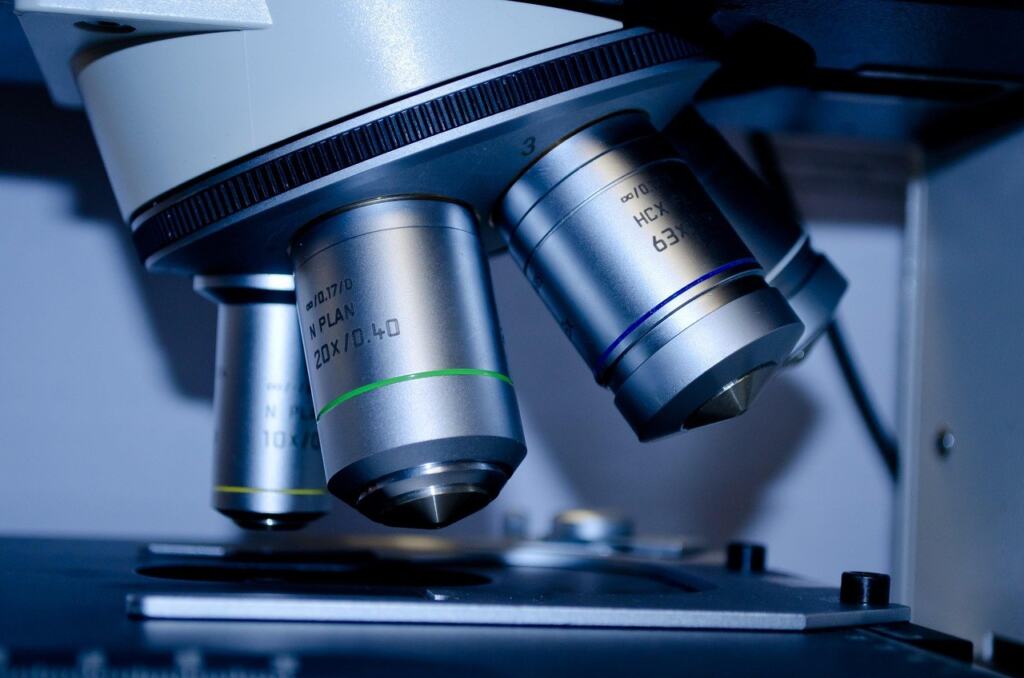
Fields under the bioscience umbrella
Bioscience is best understood as a family of fields. Reference works that students use give a good picture of its range. A college biology library guide describes a dictionary of cell and molecular biology that incorporates terms from neuroscience, genetics, microbiology, immunology, pathology and physiology, and another biology dictionary whose broadest coverage runs from ecology to immunology and cytology. The comparison below sets out how some of these fields differ in what they study and what their evidence tends to look like.
| Field | What it studies | Typical evidence |
|---|---|---|
| Microbiology | Microorganisms and how they grow and behave | Cultures on agar, counts and observations of colonies |
| Molecular and cell biology | Cells and the molecules inside them | Microscopy, sample preparation, laboratory assays |
| Genetics | Inheritance and genetic material | Sequence and trait data from prepared samples |
| Immunology | How organisms defend against disease agents | Laboratory measurements on prepared samples |
| Physiology | How living bodies and their parts function | Measurements of function under controlled conditions |
| Ecology | Organisms in relation to each other and their environment | Field observations, site notes and collected samples |
| Biotechnology | Applying biological knowledge to products and processes, including genetic improvement of plants, livestock and aquatic species, and pest control | Developed organisms, products and trial results |
The field names follow the coverage of the reference dictionaries described by a college biology library guide, and the biotechnology row reflects agricultural interests described in an article in PubMed Central.
Microbiology and culture work
Microbiology deals with microorganisms, and its most recognisable working method is growing them on a nutrient surface. Each pale, round spot on an agar plate is a visible colony, so a plate turns something too small to see into something that can be counted, compared and photographed.
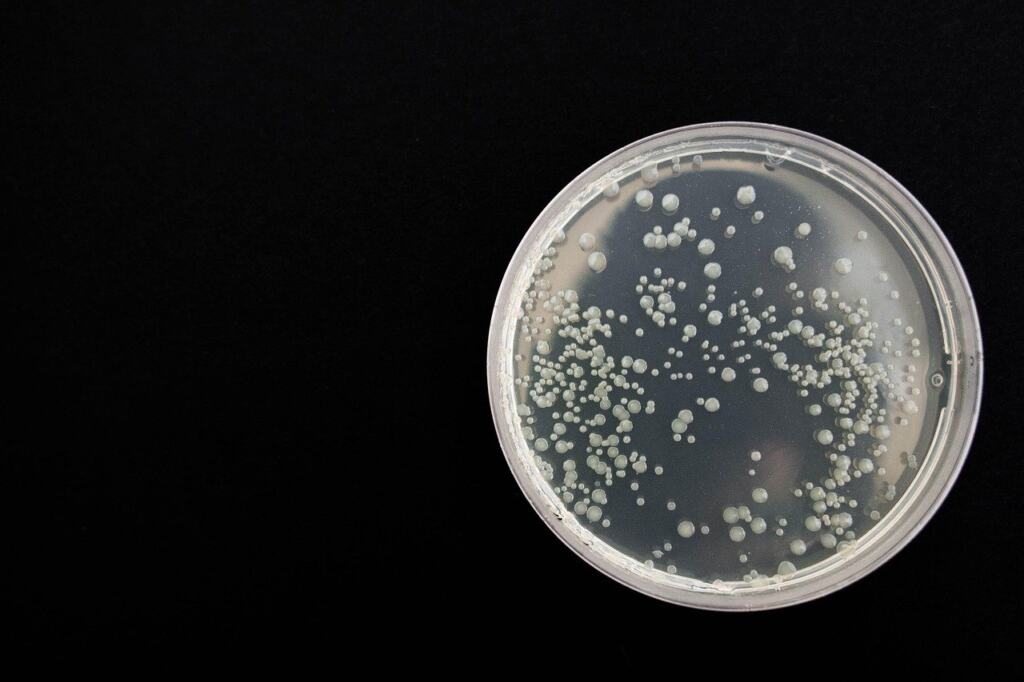
This field suits people who like controlled, repeatable procedures. Its results are usually read directly from the plate, so a clear record of the conditions matters as much as the colonies themselves.
Molecular and cell biology
Molecular and cell biology work at a smaller scale than microbiology. Instead of whole microorganisms, the subject is cells and the molecules inside them. The college library guide notes that a dictionary of cell and molecular biology runs to over 10,000 entries, a sign of how much specialised vocabulary a newcomer meets. Work in this area leans heavily on prepared samples and instruments, so the methods section of a paper tends to carry most of the weight.
Ecology and field work
Ecology moves the work outside. Its question is how organisms relate to one another and to their environment, so the data come from sites, not shelves. One biology dictionary edition was expanded in particular in ecology, cell biology, and plant and animal development, which shows how these areas sit together within the wider subject.
Field work carries a particular discipline: conditions at the site cannot be reset, so notes taken at the time of sampling are the evidence. A paper from this field usually describes the location and sampling approach more fully than a purely laboratory paper does.
Biotechnology
Biotechnology applies biological knowledge to practical ends. Agriculture is a clear case: the PubMed Central article lists genetic improvement of plants, livestock and aquatic species among biotechnology interests, along with pest control. Because the goal is a working product or process, the evidence in this field often includes trial outcomes as well as laboratory observations.
What bioscientists do day to day
No single week describes every bioscientist, because the mix depends on the field and the stage of the project. Most weeks draw on three kinds of activity: bench work, field work and desk work.
- Bench work. Handling samples with a pipette, preparing dishes and tubes, growing cultures and examining material under a microscope are routine in microbiology, cell biology and molecular biology.
- Field work. Ecologists spend time at sites collecting samples and writing notes, then bring the material back for further analysis.
- Desk work. Logging results, analysing data, reading earlier studies and drafting the write-up take up a large share of the time in every field.

If you are weighing a field of study or a career direction, ask which of these three activities you would enjoy most. A person who prefers outdoor work and observation will find ecology a better match than a bench-heavy field, and the reverse holds for someone who likes controlled procedures.
Much of this work depends on colleagues, technicians, shared facilities and funders, and published papers credit them. For the practical details of crediting that support, see how to write acknowledgements in a research paper.
Why published bioscience matters beyond the lab
Published bioscience feeds applied work. The PubMed Central article expects post-genomic advances to produce new biotechnology products for what it describes as an already existing billion-dollar industry. That link between research and products is one reason journals expect methods to be described clearly: other researchers and developers need to judge whether a result can be repeated and built upon.
For a reader, the practical consequence is that a paper’s methods and evidence deserve as much attention as its conclusion. A result from a well-described culture experiment, a documented field site or a defined laboratory procedure can be checked. A result without that description cannot.
Frequently asked questions
Where can students find scholarly sources for bioscience assignments?
College library guides are a sensible starting point. One bioscience guide from a US college library directs students to scholarly, academic sources for bioscience assignments, and many institutions publish similar guides for their courses.
Why are the life sciences expected to matter so much this century?
The author of the PubMed Central article states that we are at the beginning of a century that will most likely be shaped by advances in the life sciences. The same article describes bioscience advances as promising help for the health and welfare of mankind, as well as further exploration of the frontiers of the field.
Where can I look up unfamiliar bioscience terms?
A specialist dictionary is the quickest route. The over 10,000 entries in a dictionary of cell and molecular biology include related terms from neuroscience, genetics, microbiology, immunology, pathology and physiology, according to a college biology library guide.