

You have finished the experiments and need a home for the manuscript. Match your paper’s subfield to the scope statements of bioscience journals first, then shape the text in IMRaD order before you submit.
This page maps the routes through the topic, from defining the field to submission. If you are still deciding what counts as bioscience, begin with what is bioscience research. If your data are ready, use the routes below.
Choose your route through the topic
Authors arrive at a bioscience manuscript from different starting points, and each point calls for a different first step. Pick the route that matches your situation and treat the other sections as reference.
- You need to place your work in the field. Read the section on what bioscience research covers below. It ties microbiology, molecular biology, biotechnology, biodiversity and ecology to the way journals describe their own scope, which is the language you will later use to justify a submission.
- The experiments are done and nothing is written. Start with how to write a bioscience research paper, then keep the structure of a bioscience research paper beside you as a checklist for section order.
- A draft exists and you need a destination. Move to the journal-matching section on this page, then to how to choose a bioscience journal for a fuller decision process. Once a target is chosen, how to publish a bioscience research paper covers the submission stage.
- You are close to submitting. Read the integrity and finishing section, which covers similarity checks, ethics statements and acknowledgements.
The routes are sequential in the sense that journal choice shapes how you write. A methods-focused journal and a broad general journal expect different emphasis, so it pays to glance at likely targets before the draft hardens. The next section gives you the vocabulary for that glance.
What bioscience research covers
Bioscience research is the study of living systems, from cells and molecules to organisms and ecosystems, and journal scope statements show how wide that range is. BioScience, published by the American Institute of Biological Sciences, publishes topical overviews and articles on current biology research, and a library listing describes it as presenting advances in biological science for researchers, administrators and teachers. That audience note matters: a society journal of this kind is written for readers beyond one narrow specialism, so an overview-style paper suits it better than a dense methods report.
The Journal of Biological Sciences gives one of the clearest working definitions in practice. Its scope includes cell biology, developmental biology, structural biology, microbiology, molecular biology and genetics, and it extends to biotechnology, biodiversity, entomology, toxicology, ecology, freshwater biology and marine biology. Reading a list like that tells you that “bioscience” works as an umbrella, and that your paper will usually belong to one named subfield within it.
Microbiology
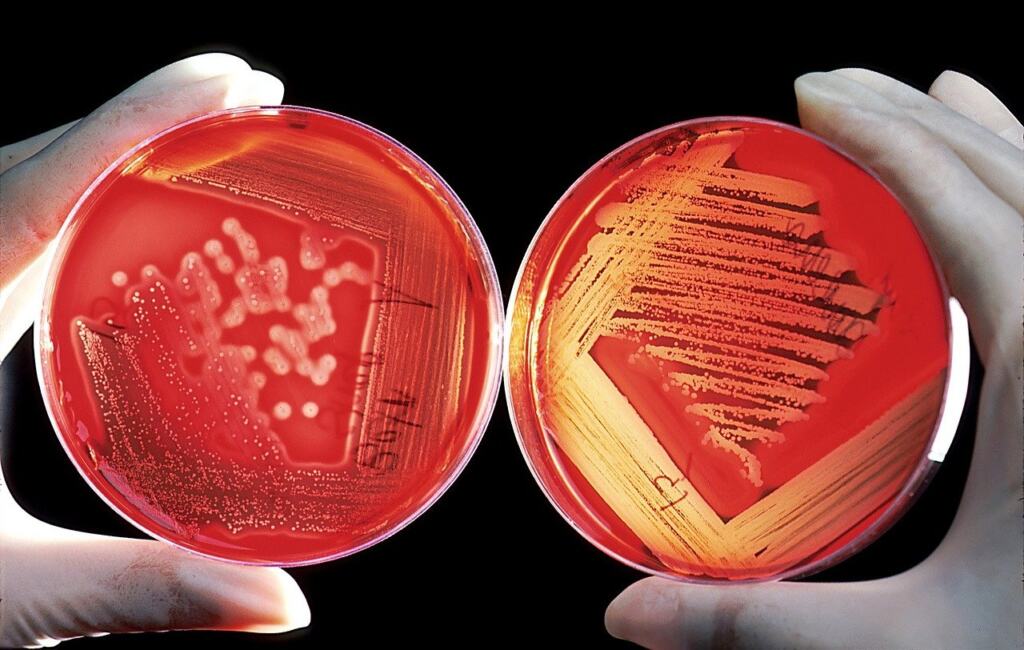
Microbiology papers deal with organisms such as bacteria and fungi, and the journals that publish them often tie the work to an application. The Journal of Microbiology, Biotechnology and Food Sciences, for example, publishes articles on agriculture, animal and plant microbiology including bacteria and fungi. If your isolates come from crops, soil or food systems, a title that names that setting is a more natural home than a general journal, because its readers already share your context.
Molecular and cell biology
Molecular biology sits at the centre of many bioscience titles. Cell Research, for instance, publishes original research and reviews, commentaries and short communications in cell, molecular and developmental biology. The mix of formats is a useful signal. A journal that accepts short communications as well as full articles gives you a choice about how much of your dataset to present at once, and a focused finding may fit a shorter format better than a sprawling full paper.
Methods have their own outlet too. Biological Procedures Online publishes articles that improve access to techniques and methods in the medical and biological sciences. If your main contribution is a protocol rather than a discovery, a journal built around methods is the more honest match, and it saves you from arguing for novelty that your paper does not claim.
Biotechnology
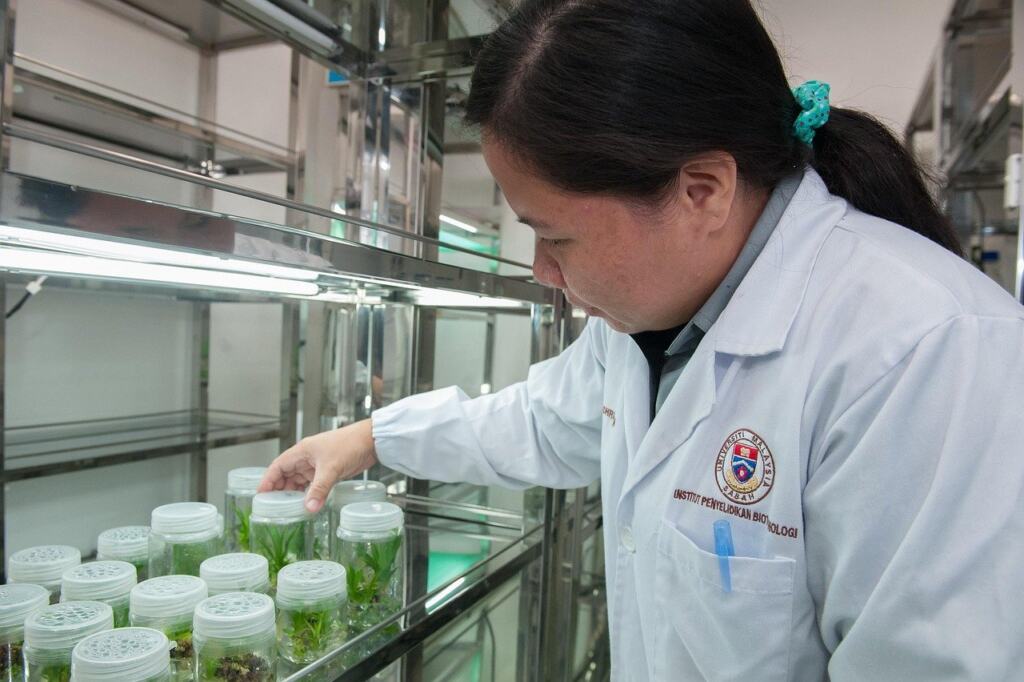
Biotechnology appears in the scope of both the Journal of Biological Sciences and the Journal of Microbiology, Biotechnology and Food Sciences, which shows how often it overlaps with microbiology and agriculture. Plant tissue culture is a typical example of the applied side, where the research question often concerns propagation or crop improvement rather than basic mechanism.
When your work is applied, say so in the first paragraph of the Introduction and in the cover letter. Editors at a journal with a biotechnology scope are looking for a clear link between the technique and a practical problem, and a paper that hides that link looks like a poor fit.
Biodiversity and ecology
Ecology and biodiversity journals range from broad to regional. Ecotropica covers all fields of research in tropical ecology, which makes it a precise target for tropical field studies and a poor one for temperate work. The Journal of Environmental Biology, by contrast, presents strategies, technologies and action plans to conserve nature and natural resources, which suits ecological studies that end in management or conservation recommendations.

The decision rule is simple. If your result is about a place or an ecosystem, favour a journal whose scope names that setting. If it is about a principle that could apply anywhere, a broader journal gives the finding a wider readership.
Bioscience compared with biology
In journal practice the two labels overlap heavily, so the difference is mostly one of breadth and framing rather than of separate disciplines. Current Biology is a general journal that publishes original research across all areas of biology, while the Journal of Biological Sciences lists the same subfields under a bioscience banner. A scope statement is therefore a better guide than the word in a journal’s title.
For an author, the practical consequence is that you should not choose a journal because it says “bioscience” or “biology”. Read what it says it publishes, and check that your subfield is named or clearly implied. With the field mapped, the next step is turning lab records into a manuscript.

From lab record to IMRaD manuscript
IMRaD, short for Introduction, Methods, Results and Discussion, is the most common structure for writing articles in the scientific community, and it is recognised by journals worldwide, including those indexed in Web of Science or Scopus. For a bioscience author this is useful because the order mirrors the lab workflow: you asked a question, did the work, recorded the data and interpreted them.
Write the sections in the order that suits your evidence rather than the order readers meet them. Many authors draft Methods and Results first, because those sections record what was actually done and found, and write the Introduction and Discussion once the story is clear. Each section has a distinct job, and the sections below treat them in reading order.
Introduction
The Introduction introduces the paper to the reader, stating the problem and the purpose of the study. In bioscience that usually means naming the organism, system or process, saying what is unresolved, and stating your question in a form the Results can answer. Keep it tied to that question. Background that does not lead to the question belongs in a review, and if that is what you are writing, see how to write a review article in biology.
Methods
Methods describe the setting in which the study was conducted, the research methods and the data processing, without interpretation. This is where lab practice meets publishing practice, because the quality of the section depends on how well the bench records were kept. Reagents, strains or samples, conditions and analysis steps all need to be recoverable from your notebook if a reader is to repeat the work.
Vague wording is a common error. A sentence such as “data were analysed using a special software program” tells a reader nothing they can check. Name the software and the tests, and state which data each test was applied to. Statistical choices deserve their own care, and statistical analysis in bioscience research covers them in detail.
Results
The Results section should present the data objectively, without adding your own conclusions or interpretations. State what you observed, in the order that follows your Methods, and let figures and tables carry the detail. If you find yourself explaining why a result happened, move that sentence to the Discussion. The guidance on how to write results section of a scientific paper expands on figures, tables and ordering.
Discussion
The Discussion should compare your results with the results of other studies on similar topics and suggest ideas for future research. A strong Discussion returns to the question posed in the Introduction, says whether the data answer it, and places the answer against earlier work. Limits belong here too. Stating them plainly reads as competence to a reviewer, whereas an overstated conclusion invites the criticism you hoped to avoid.
Title and abstract
The title and abstract are written last but read first, and most readers will see nothing else before deciding whether to continue. Draft the abstract from the finished paper so that it reports what the paper actually found. Two dedicated guides cover these pieces: how to write an abstract for a biology paper is not needed here because the abstract guide is at how to write an abstract for a biology paper, and how to write a title for a scientific paper covers the title.
What the A in IMRaD means
Some sources note that the letter A is read most commonly as the conjunction “and”, so IMRaD is Introduction, Methods, Results and Discussion. A minority of scholars read the A as “Analysis”. The difference is cosmetic, because the four content blocks are the same either way.

Matching a manuscript to a journal
Choose a journal by comparing your paper’s subfield, format and audience with the journal’s own scope statement, and do this before the final draft is polished. The table below compares journals named in university library guides across the criteria that matter most to an author: what they cover and what kind of paper suits them.
| Journal | Scope in brief | Suits | Planning use |
|---|---|---|---|
| BioScience | Topical overviews and articles on current biology research and issues | Broad, overview-style contributions for researchers, administrators and teachers | Consider when your paper explains an issue to readers outside your specialism. |
| Current Biology | General journal publishing original research across all areas of biology | Original findings with appeal beyond one subfield | Consider when the result is of interest across biology. |
| Communications Biology | Open access Nature Portfolio journal publishing high-quality research | Authors who want open access publication | Check its scope against your subfield before drafting. |
| PLOS Biology | Flagship PLOS journal in the life sciences | Life sciences research of broad relevance | Read its scope to see whether your question is general enough. |
| Cell Research | Original research, reviews, commentaries and short communications in cell, molecular and developmental biology | Cell and molecular studies, including shorter formats | A fit if your data suit a focused communication. |
| Journal of Microbiology, Biotechnology and Food Sciences | Agriculture, animal and plant microbiology including bacteria and fungi | Applied microbiology and biotechnology | Frame the paper around the agricultural or food context. |
| Biological Procedures Online | Techniques and methods in the medical and biological sciences | Protocol and methods papers | Use when the method itself is the contribution. |
| Ecotropica | All fields of research in tropical ecology | Tropical field studies | Use only when the study system is tropical. |
| Journal of Environmental Biology | Strategies, technologies and action plans to conserve nature and natural resources | Ecological work with conservation outcomes | A fit when your Discussion leads to management recommendations. |
Descriptions in the table follow the scope notes in the University of Central Florida biology journals guide and the UNT Dallas library biology journals listing.
Breadth against specialism
A broad journal gives a finding the widest readership, but it asks more of the paper, because the question must matter beyond your subfield. A specialist journal matches readers who already care about your organism, method or setting. If you cannot explain in one sentence why a reader outside your subfield should care, choose a specialist title and put the effort into precision rather than reach.
Access, review and indexing
Check three practical points once the scope fits. First, access model: Communications Biology is described as an open access journal from Nature Portfolio, and the wider question of cost and visibility is covered in open access publishing for biology researchers. Second, review and indexing: the Journal of Biological Sciences describes itself as a peer-reviewed and well indexed scientific journal, which is the kind of statement you should look for on any journal’s own pages. For what happens after you submit, read how peer review works for biology papers.
Third, standing within the field. Librarians publish ranked lists, such as the top-ranked biology journals according to Journal Citation Reports on the NJIT research guide. Use a ranking to build a shortlist, not to make the final choice, because a high-ranked journal with the wrong scope will return your paper faster than a modest one with the right scope.
Integrity, ethics and the finishing pieces
Before submission, check that the manuscript is original, ethically sound and fully credited, because editors can reject a paper on these grounds regardless of its science. Treat this as a separate pass over the finished draft rather than something to fix during writing.
Similarity screening is routine at many journals, so read plagiarism in scientific publishing to understand what a similarity report flags and how to handle your own earlier text. Methods wording is the usual trouble spot, since protocols are often described in near-identical language. Paraphrase carefully and cite the original protocol.
Ethics statements are the second element. Work involving animals, human participants or field permits needs a clear statement of approval, and research ethics in bioscience explains what editors expect to see. Last, credit those who helped but do not qualify as authors, and declare any competing interests, as set out in how to write acknowledgements in a research paper.
Frequently asked questions
| Question | Answer |
|---|---|
| Does every bioscience journal require IMRaD? | IMRaD is the most common structure in the scientific community and is recognised by journals worldwide, but each journal’s author guidelines set the exact section headings, so check them before formatting. |
| What does the A in IMRaD stand for? | It is most often read as the word “and”, giving Introduction, Methods, Results and Discussion. Some scholars read it as “Analysis”. |
| Who is BioScience written for? | It is published by the American Institute of Biological Sciences and presents advances in biological science for researchers, administrators and teachers. |
| Is peer review enough when judging a journal? | It is a minimum. Look also for stated indexing and a scope statement that names your subfield, as the Journal of Biological Sciences does for cell, molecular and microbial biology. |