

Agribusiness research papers answer different questions, so pick the question first: farm profitability, marketing, cooperatives or value chains. That choice decides your data, your method and the journals worth searching.
Picture a student with a loose topic, “farmers and markets”, and a reading list that mixes price studies, cost records and processing case studies. Sorting that pile by research question gives distinct streams of work, each with its own evidence and its own outlets. The sections below follow those streams, and a decision checklist at the end helps you commit to one.
Broader subject areas sit in our guide to agriculture research topics. This page narrows the field to the economics of firms and markets.
What agribusiness papers cover
Agribusiness papers apply economic analysis to the organization and performance of firms and markets, according to the New Mexico State University agricultural economics library guide. The same guide lists the subject areas typical of the field: supply and demand, industrial organization, price and trade, marketing, finance and public policy.
Those areas are the raw material for the four research questions in this guide. Finance feeds profitability work, price and trade analysis feeds marketing work, and industrial organization helps explain cooperatives and value chains. Public policy cuts across all of them, so a paper on any of these questions may also ask what a rule or programme changes for farmers and buyers.
Farm profitability studies
A farm profitability analysis study asks whether an enterprise earns more than it costs, and what drives the gap. It suits you if you can reach farm-level income and expense data, either from records a farm already keeps or from interviews you conduct yourself.
The financial side of agribusiness literature is where these papers tend to sit, because finance is one of the subject areas listed by the NMSU library guide. The practical limit is evidence quality. A profitability result is only as sound as the records behind it, so a topic that depends on farmers recalling costs from memory needs a careful questionnaire and a clear statement of what was counted.

If your enterprise is livestock, the same profitability and marketing questions apply, and the poultry research papers guide shows how animal-focused studies are organised.
Agricultural marketing research
Agricultural marketing research looks at how produce is priced, traded and sold. Typical agricultural marketing research topics follow the subject areas in the NMSU library guide: supply and demand analysis, price and trade analysis, and the structure of the firms that buy and sell.
This stream suits you if you can obtain market price series or trader information. It is a poor fit if your only data comes from a single farm, because marketing questions are about relationships between sellers, buyers and prices across a market.
For finding papers, the same guide notes that the Journal of Agricultural Economics covers related disciplines such as statistics, marketing and business management, and that AGRICOLA covers marketing among its major subjects.
Agricultural cooperatives research
Agricultural cooperatives research treats the cooperative as a firm whose organization and performance can be analysed. That places it within the industrial organization area of agribusiness economics listed in the NMSU library guide.
It suits you if your access is to cooperative members, managers or records, because the useful questions are about how the organization functions: how members are served, how the cooperative performs and how it compares with other buyers or processors in the same market. It is a harder choice if you cannot reach a cooperative directly, since published case material then becomes your main evidence.
Start literature searches in AgEcon Search and CABDirect, both described below, and read cooperative papers alongside marketing papers. A cooperative is usually a channel in a market, so its results are easier to interpret next to the prices and alternatives its members face.
Value chain studies
Value chain studies follow a product from farm to final buyer and ask who performs each step and what each step adds. They suit you if you want breadth: one product, several actors and a question about where margins, delays or losses occur.

Processing and value addition
Value addition work examines what happens when a raw crop is processed into something more saleable. A root crop that is peeled, grated and sold as a processed product is a standard example of the step such studies analyse. The analysis is economic, so it concerns the firms doing the processing and the markets they sell into, as in the firms-and-markets definition given by the NMSU library guide.

Marketing channels and logistics

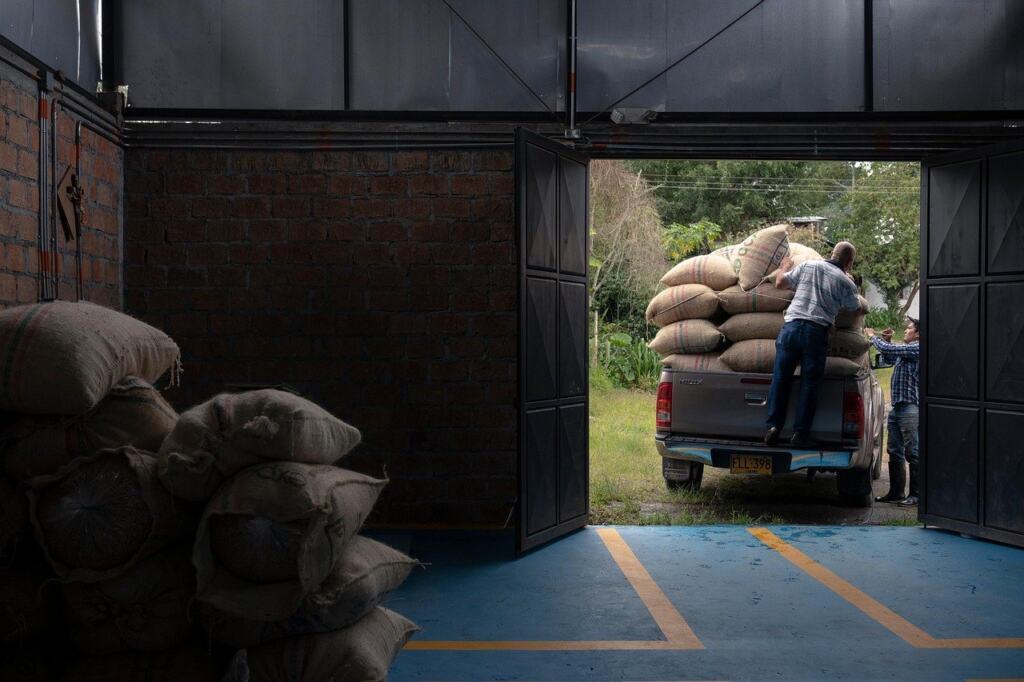
The other half of a value chain is movement. Bulk produce has to be bagged, loaded, transported and sold, and each handover is a place where a study can measure cost or price. This sub-topic overlaps with marketing research, so choose it when your question is about the whole route rather than the final price.
Methods that recur across these questions
The methods named in the NMSU library guide are analytical approaches rather than data-collection tools, so the practical choice is which one fits the evidence you can obtain.

- Supply and demand analysis. Best when you hold quantity and price information for a product and want to explain how the market clears.
- Industrial organization analysis. Best for questions about how firms are structured and compete, which makes it the natural frame for cooperatives and processors.
- Price and trade analysis. Best when your data is a run of prices or trade flows, as in marketing and logistics studies.
- Financial analysis. Best when you have income and expense records, which is the profitability case.
Whatever you choose, state the method and the data together in your paper. Reviewers and readers judge a result against what the data could support. For writing the paper itself, see how to write an agriculture research paper.
Journals and repositories for agricultural economics
Agricultural economics and marketing research is spread across society journals, open repositories and indexes. The table compares the main outlets by what they offer a researcher.
| Outlet | What it is | Planning use |
|---|---|---|
| AgEcon Search | Free, open access repository of full-text literature in agricultural and applied economics | First stop when you need full texts without a subscription |
| AGRICOLA | Covers more than 5,000 journal titles from 1970 to present, including agricultural engineering and marketing | Broad searches across older and newer marketing literature |
| CABDirect | Index to international agricultural literature, including books, conference proceedings and journal articles, from 1973 to present | Finding conference papers and international case studies |
| Journal of Agricultural Economics | Published on behalf of the Agricultural Economics Society; covers related disciplines such as statistics, marketing and business management | Marketing and business management papers |
| American Journal of Agricultural Economics | Forum for work on the economics of agriculture, food, natural resources and rural development | Wider economic framing, including rural development |
| Journal of Agricultural and Applied Economics | Scholarly work on research, extension and teaching in agricultural and applied economics | Studies with an extension or teaching angle |
| Current Agriculture Research Journal | Open access, international, double-blind peer-reviewed; average publication time 98 days; triannual in April, August and December | Open-access submission with a stated timeline |
Descriptions of the repositories and society journals come from the NMSU agricultural economics library guide, and the Current Agriculture Research Journal details come from the journal’s own site.
Use the repositories to read and the journals to publish. The publication time is the journal’s own average rather than a guarantee, so treat it as a planning guide and check the current submission information before you commit to a deadline.
Choosing your question
Work through these steps in order and stop when one question clearly fits your access and data.
- List the data you can actually reach. Farm records point to profitability, price series to marketing, cooperative members to cooperatives research, and a single product’s route to value chains.
- Match the data to a method. Pair financial analysis with records, price and trade analysis with price series, and industrial organization analysis with firm-level questions.
- Read two or three papers from one repository first. AgEcon Search is the easiest place to start because the full text is free.
- Pick the journal whose scope names your topic. Marketing and business management suits the Journal of Agricultural Economics, while rural development sits within the American Journal of Agricultural Economics.
- Narrow to a single product and a single place. A tight scope produces a result you can defend with the evidence you hold.
Frequently asked questions
Are agribusiness and agricultural economics the same field?
They overlap. Agribusiness papers apply economic analysis to firms and markets, while the American Journal of Agricultural Economics also covers natural resources and rural development, so agricultural economics is the wider field.
Where can I read this research without paying?
AgEcon Search is a free, open access repository of full-text literature in agricultural and applied economics. The Current Agriculture Research Journal is also open access.
How long does publication take in an open-access journal?
The Current Agriculture Research Journal reports an average publication time of 98 days and issues in April, August and December. Treat that as the journal’s own average, not a promise for your paper.