
A student with field notes but no paper should choose agriculture research topics by problem first: yield, soil fertility, pest control or smallholder livelihoods. Then design the study, write it up and match it to a journal.
This page maps the main subject areas, then points to guidance on how to write an agriculture research paper and how to publish agriculture research paper submissions once the work is done. Use the routes below to enter at the stage you are in.
Reader paths through agriculture research
Most readers arrive with one of four goals. Each goal has a sensible order of steps, and skipping ahead usually costs time later.
- You need a topic. Read the subject areas below, choose the area where a real production problem exists, and narrow it to one measurable question. Then check the dedicated lists, such as the full set of agronomy research papers, to see how others have framed similar questions.
- You have a topic and need a design. Move to the section on designing a study, then read how to design a field experiment in agriculture before you plant anything.
- You have results and need a manuscript. Start with the writing section, then follow the step-by-step guide on how to write an agriculture research paper.
- You have a manuscript and need a home for it. Go to the publishing section, which links to journal selection, indexing checks and warnings about unreliable outlets.
If you are unsure which route fits, begin with the subject map. Defining the problem first prevents a common mistake: writing a methods section for a question nobody has asked.
What agriculture research covers
Agriculture research spans the science of growing crops, managing soil and water, protecting plants and livestock, and getting produce to markets. Agronomy sits at its centre. A Grafiati literature selection on agronomy defines it as the science and technology of crop and soil management for producing food, fiber, feed and fuel. That definition is useful for choosing a topic because it shows two linked halves: what happens in the crop and what happens in the soil.
Agronomy and crop yield
Crop yield is the outcome most agronomy papers try to explain or improve. The same literature selection describes agronomy as playing a crucial role in food security and sustainability through soil management and crop production, and it states that agronomy will become increasingly vital as the global population rises and food demand escalates. For a researcher, this means yield studies are rarely about yield alone. They ask which management choice, variety or input produced a difference, and under which conditions.
Plant breeding is one of the key topics listed there, aimed at improved crop varieties. Breeding papers tend to suit researchers with access to germplasm and trial sites. If you lack both, a management study on an existing variety is a more realistic starting point.
Soil fertility and water management
Soil fertility is the second pillar of the agronomy topic list. The Grafiati selection names optimized plant nutrition and soil fertility management among its key topics, alongside water management. These areas pair naturally with yield: a fertility paper usually reports a yield response, and a water paper usually reports how yield changed under a given supply.
Choose a soil or water topic when you can control or at least describe the site conditions. Without a clear description of the soil you worked on, a reader cannot judge whether your result applies to their own field.
Integrated pest management
Integrated pest management appears in the same source as one of the key areas of focus in agronomy innovation, next to precision agriculture and crop breeding and biotechnology. Pest management is also listed as a key research topic. In practice, this makes it a strong option for researchers who want applied results, because the question is easy to state: which combination of practices keeps damage acceptable?
Papers in this area are stronger when they describe the whole programme rather than a single product. A study that compares management combinations tells growers more than one that tests a single spray in isolation.
Precision agriculture
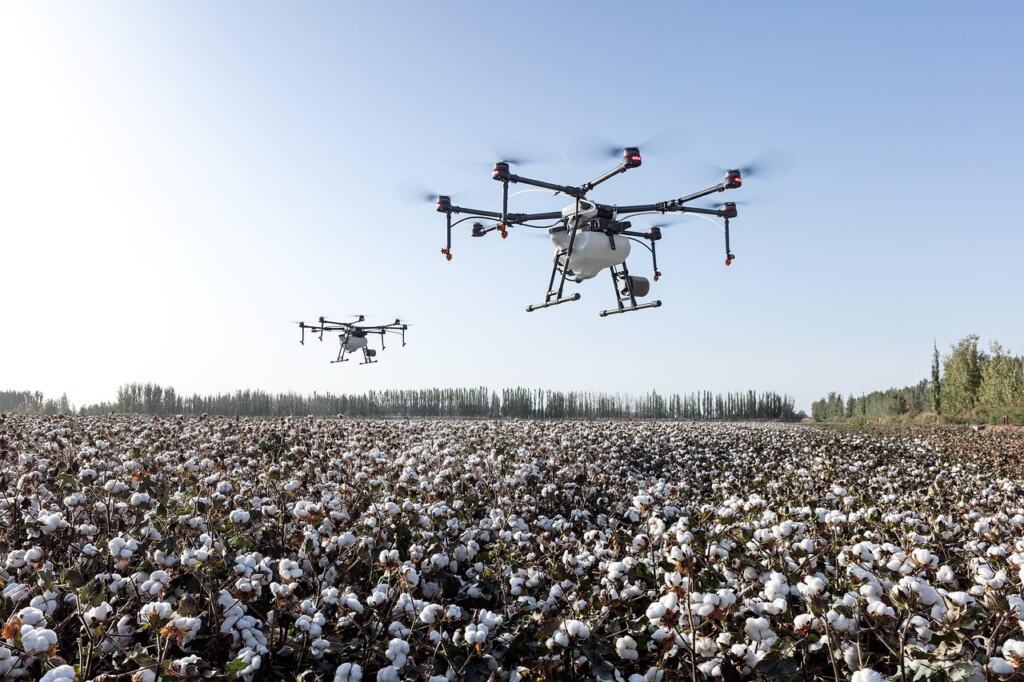
Precision agriculture is named among the focus areas of agronomy innovation. It suits researchers comfortable with sensors, mapping or drone platforms, and it often produces papers that combine agronomy with data analysis. The risk is a technology-led paper that never ties its measurements back to a crop outcome. Anchor the work to a yield, quality or input question.
Smallholder farming and rural development
Smallholder farming is where agronomy meets development. A special-issue description in the Grafiati selection focuses on agronomic research conducted as a component of rural development efforts in the global South, and it calls for critical review of orientations, methodologies and research practices. The message for authors is practical: smallholder studies should explain the farming context, because the farmers’ constraints shape which result counts as useful.
If your work is on smallholder systems, make the setting explicit in the introduction. It helps reviewers see why the question matters, and the guide on how to write an introduction for an agriculture research paper covers how to frame it.
Comparing research areas
The table compares the main areas named above. It is meant to help you match your resources and interests to a topic rather than to rank the areas.
| Research area | Typical question | Suits | Planning use |
|---|---|---|---|
| Plant breeding | Does a variety perform better than existing ones? | Teams with access to varieties and trial sites | Choose when you can describe the genetic material and test it across sites. |
| Soil fertility and plant nutrition | How does a nutrient management choice change crop response? | Researchers who can characterise the soil | Choose when you can pair a soil description with a yield result. |
| Water management | How does water supply affect the crop? | Sites where water can be controlled or measured | Choose when water supply is a variable you can document. |
| Integrated pest management | Which combined practices keep pests under control? | Applied researchers working with growers | Choose when you can compare programmes, not single products. |
| Precision agriculture | Can data from sensors or imagery guide management? | Researchers with data and technology skills | Choose when you can link measurements to a crop outcome. |
| Development-oriented agronomy | What works for farmers in a given rural setting? | Researchers engaged with smallholder communities | Choose when the farming context can be described in detail. |
| Literature-based review | What does existing work say about a question? | Early-career authors or desk-based projects | Choose when field access is limited but sources are plentiful. |
The research areas draw on the Grafiati agronomy selection, and the literature-based row follows the definition in Capstone’s guidance on agriculture literature reviews.
Crops and sectors beyond core agronomy
Agronomy covers field crops broadly, but agriculture research papers are also organised by crop group and sector. Each has its own questions, methods and journals, so a narrower reading list saves time.
Staple crops and food security
Research on cereals and other staples connects directly to the food-security argument that runs through agronomy. Grafiati’s agronomy selection ties soil management and crop production to food security and sustainability. When you write about a staple crop, state which part of that chain you are testing, whether variety, nutrition, water or protection, rather than claiming a broad food-security contribution.
Horticulture
Horticultural crops, such as vegetables and fruit, raise different questions from field cereals. Quality, appearance and handling often matter alongside yield. If your interest lies there, the list of horticulture research papers is the better place to browse than the agronomy list.
Livestock and agribusiness
Animal production forms its own literature. For animal-based work, browse the collection of poultry research papers, which also covers dairy. Studies of markets, costs and supply chains belong to a different tradition again, and the agribusiness research papers page is the place to start for them. Choosing between a biological question and an economic one early on decides which methods you need and which journals will read your work.

Designing a study that can be published
A study is publishable when its question, design and measurements fit together. The design decides what you can claim, so settle it before data collection rather than after.
Start by writing the question as a comparison: which management choice, variety or practice against which alternative, measured on which outcome. Then match the setting to the question. A field trial suits questions about crop response under real conditions. A desk-based review suits questions about what is already known. The dedicated guide on how to design a field experiment in agriculture develops this in detail.
The Grafiati special-issue description is a reminder that methodologies and research practices in agronomy are themselves open to critical review. Reviewers do examine how a trial was set up, so record the site, the treatments and the measurements in enough detail that another researcher could repeat the work.
Funding shapes design as well. A trial that needs several seasons or specialist equipment needs support before it begins, and the overview of agricultural research grants explains where that support can come from.
Writing the paper
A good agricultural paper reads as a single argument: the problem, what is already known, what you did, what you found and what it means. The detailed walk-through is in the guide on how to write an agriculture research paper. This section covers the parts where authors most often lose readers.
Build the literature review first
Capstone’s guidance defines a literature review as a systematic method of identifying, evaluating and synthesizing current work produced by other researchers. In an agriculture dissertation it sits as the second chapter, after the introduction, so it follows the statement of the problem and leads into your method. A review that only lists studies misses the point. Group sources by what they found and where they disagree, so the gap you will address is visible.
The same guidance recommends screening each source by checking whether it is peer-reviewed or written by a well-known researcher. For synthesis, it names tools such as the synthesis matrix, summary table, mapping and outline. A matrix works well for agronomy because you can set crop, site, treatment and result side by side and see which combinations remain untested.
Introduction and abstract
The introduction sets out the problem, the context and the question. Smallholder and development-oriented work needs extra care here, since readers must understand the farming setting before they can judge the result. Once the paper is drafted, the abstract is the part most readers see first, and the guide on how to write an abstract for agricultural research paper submissions explains how to condense it.
Learn from a worked paper
Reading a complete paper beside your own draft shows how the sections connect. An agriculture research paper example lets you compare structure and level of detail with your own manuscript. Use it as a model for organisation, not for wording.
Keep the work honest
Credibility rests on correct attribution and sound conduct. Before submission, review the principles of research ethics in agriculture, including how to cite and how to avoid plagiarism.
Finding sources and choosing where to publish
Searching and publishing are two sides of the same task: the places you read are often the places you should consider submitting to.
Searching the literature
Capstone’s guidance lists BIOSIS Previews among the databases that agricultural dissertation writers can use. Treat a database as one search route, not the whole search, and check each result’s access status before relying on it. When you want papers you can read without a subscription, look at the access policy on each journal’s own page, and favour peer-reviewed journals, which is the screening step recommended above.
Choosing a journal
Pick a journal after you know what kind of paper you have. A narrow field trial and a broad review belong in different places. The comparison in best agriculture journals to publish helps with shortlisting, and a check of journal indexing in agriculture shows whether a journal’s papers will be easy for other researchers to find.
Avoiding unreliable outlets
Not every journal that invites submissions is trustworthy. Before you send a manuscript, read about predatory agriculture journals and compare any candidate against those warning signs.
Submitting
When the manuscript, ethics checks and journal shortlist are ready, the submission steps are covered in the guide on how to publish agriculture research paper work in a journal. Follow the target journal’s instructions on format and supporting material rather than adapting one generic version for every submission.
Frequently asked questions
| Question | Answer |
|---|---|
| What topics does agriculture research cover? | Agronomy topics include plant breeding, soil fertility and plant nutrition, water management and pest management. Focus areas also include precision agriculture and integrated pest management. Horticulture, livestock and agribusiness have their own literatures. |
| How do I write an agricultural research paper? | Define a clear problem, review existing work, record your method in repeatable detail, then report results against the question you set. The full steps are in the linked writing guide. |
| Where can I find open agriculture research papers? | Search subject databases such as BIOSIS Previews, then check each journal’s access policy for papers you can read freely. Prefer peer-reviewed journals. |
| Where does the literature review go in an agriculture dissertation? | It is the second chapter, placed after the introduction. |